 Deutsch
 Nederlands

Jayavarman VII Library Siem Reap | Khmer History & Heritage
Jayavarman VII Library – Discovering Cambodia’s History Beyond the Temples
An inspiring cultural initiative in Siem Reap where ancient Khmer history, heritage preservation, and education come together.
When people visit Siem Reap, their attention naturally turns to the magnificent temples of Angkor. Angkor Wat, Bayon, Ta Prohm, and Banteay Srei are among Cambodia’s greatest treasures, attracting visitors from around the world. But what if you want to discover more? What if you are curious about the people who study these ancient monuments, the efforts being made to preserve them, and the stories that rarely appear in guidebooks?
Sometimes, the most interesting discoveries are found far away from the usual tourist attractions. One such place is the Jayavarman VII Library, a small but fascinating cultural and educational centre in the Chreav area of Siem Reap.
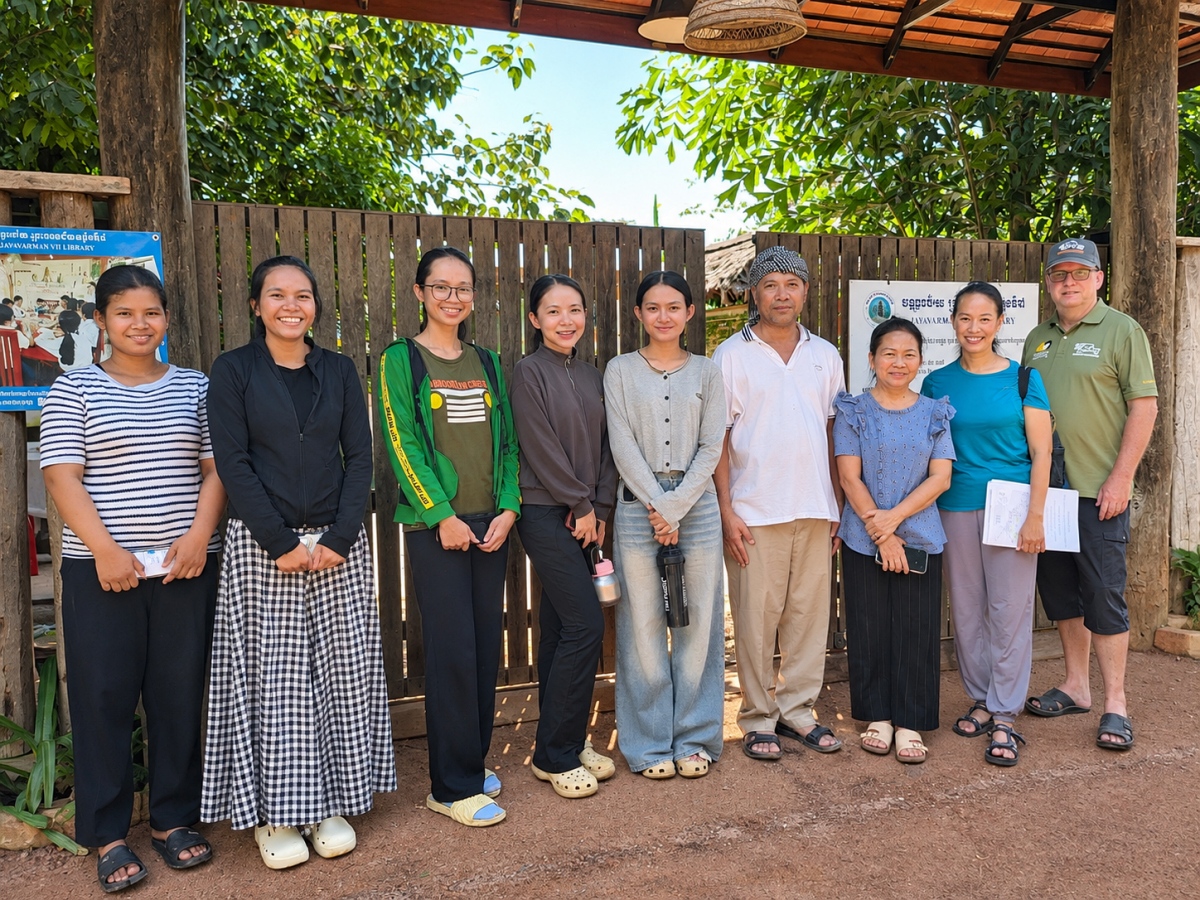
We recently visited the library and had the pleasure of meeting its founder, Kosal Mey. What we discovered was much more than a collection of books.
A Library with a Bigger Purpose
Established in 2018, the Jayavarman VII Library is dedicated to preserving and sharing knowledge about Cambodia’s remarkable history, particularly the Khmer civilisation and the Angkor period. Unlike a conventional library, this initiative brings together historical research, cultural education, heritage preservation, and community activities.
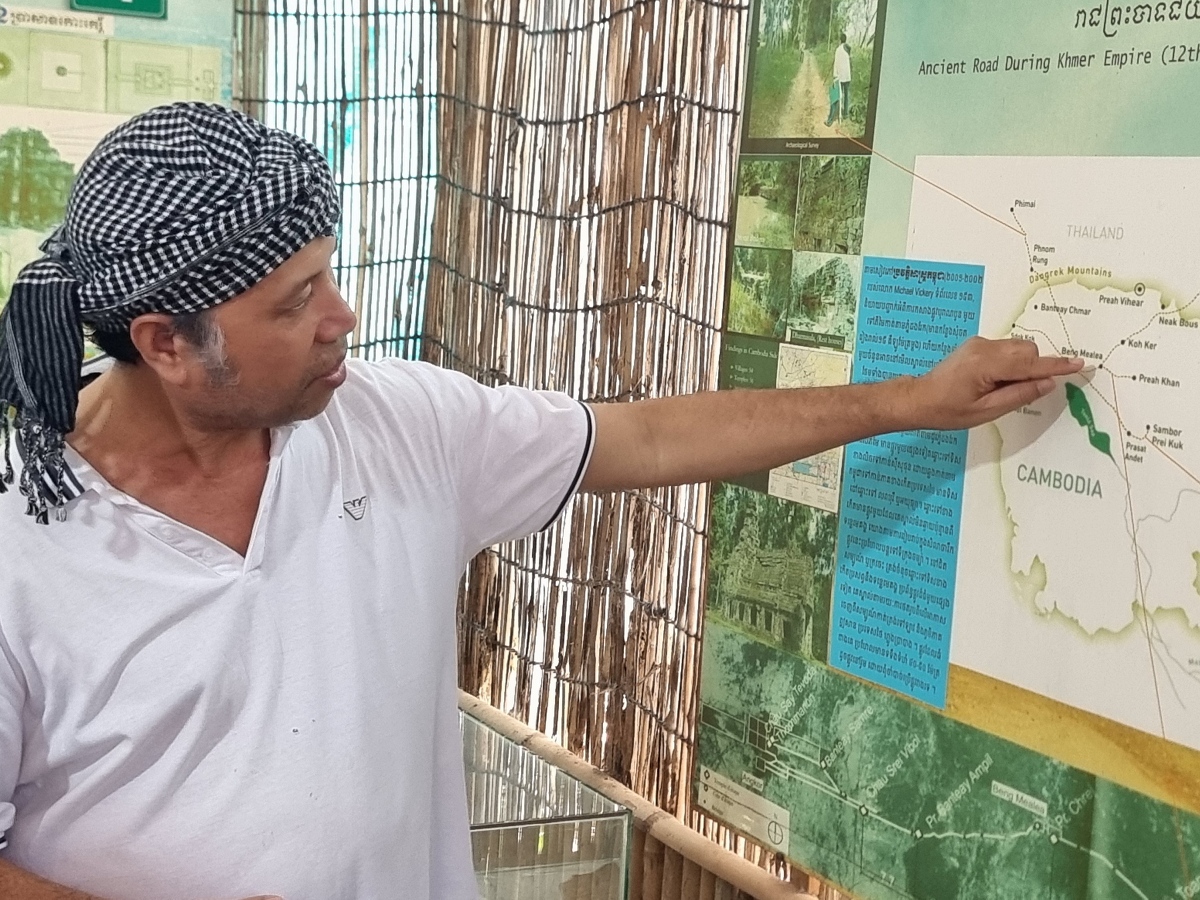
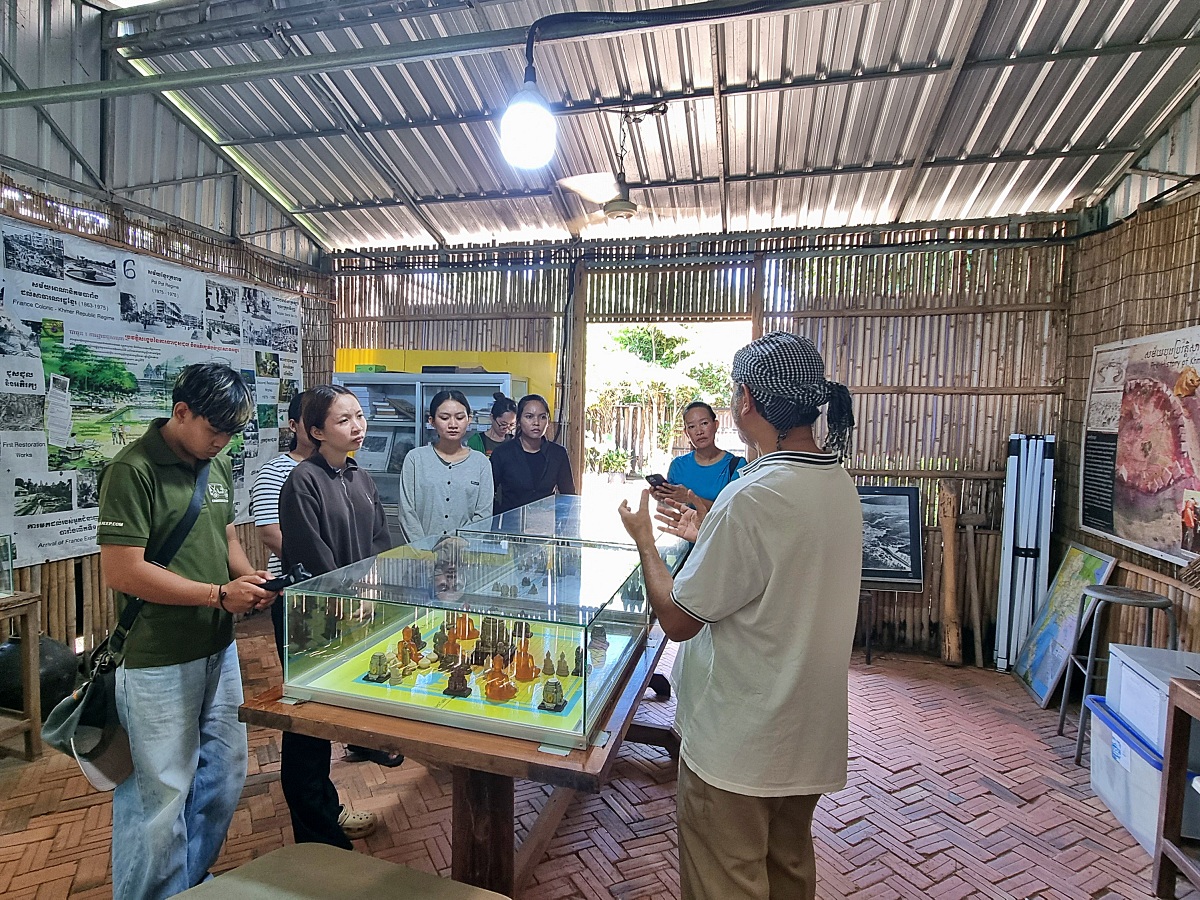
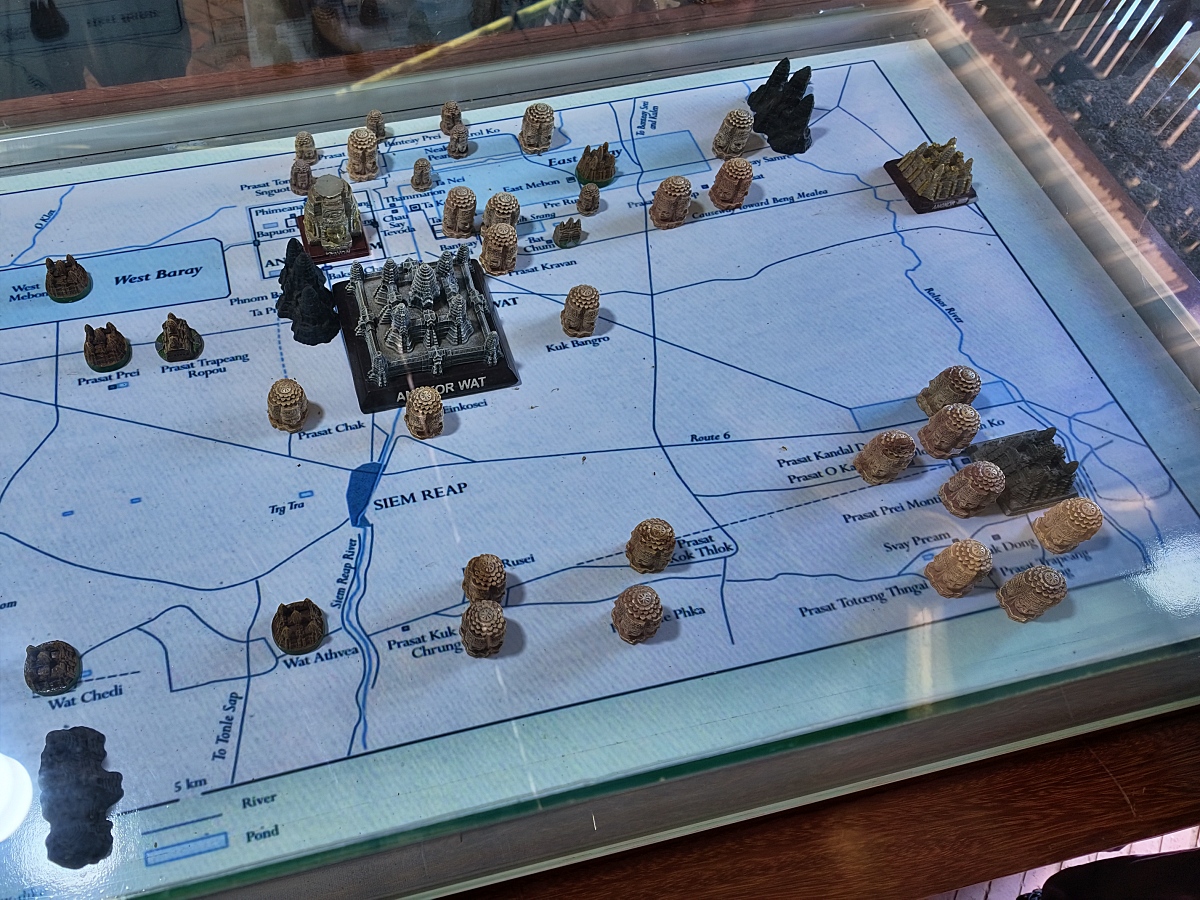
The setting itself is refreshingly simple. There are no grand exhibition halls or expensive multimedia displays. Instead, visitors discover historical maps, photographs, educational panels, books, and exhibits that help explain the extraordinary achievements of the ancient Khmer Empire.
During our visit, Kosal personally guided us through the displays, explaining historical connections between temples, ancient roads, and archaeological sites. His enthusiasm was immediately apparent. This is not simply someone presenting information he has memorised. Kosal is genuinely passionate about Cambodia’s history and actively involved in efforts to preserve its cultural heritage. He told us that he is currently involved in restoration work at the famous Bayon temple, one of Angkor’s most remarkable monuments.
For visitors interested in archaeology, architecture, and temple conservation, the opportunity to speak with someone directly involved in heritage preservation adds a completely different perspective.
Keeping Khmer Traditions Alive
One of the most meaningful aspects of the Jayavarman VII Library is its commitment to the local community. Alongside its historical activities, the library provides opportunities for children from surrounding villages to learn about Cambodia’s traditional performing arts. These include lessons in traditional Khmer musical instruments and classical Apsara dance. Both are important expressions of Cambodian cultural identity. Traditional music and dance have been passed down through generations, but preserving these skills requires dedication, teachers, and opportunities for young people to learn.
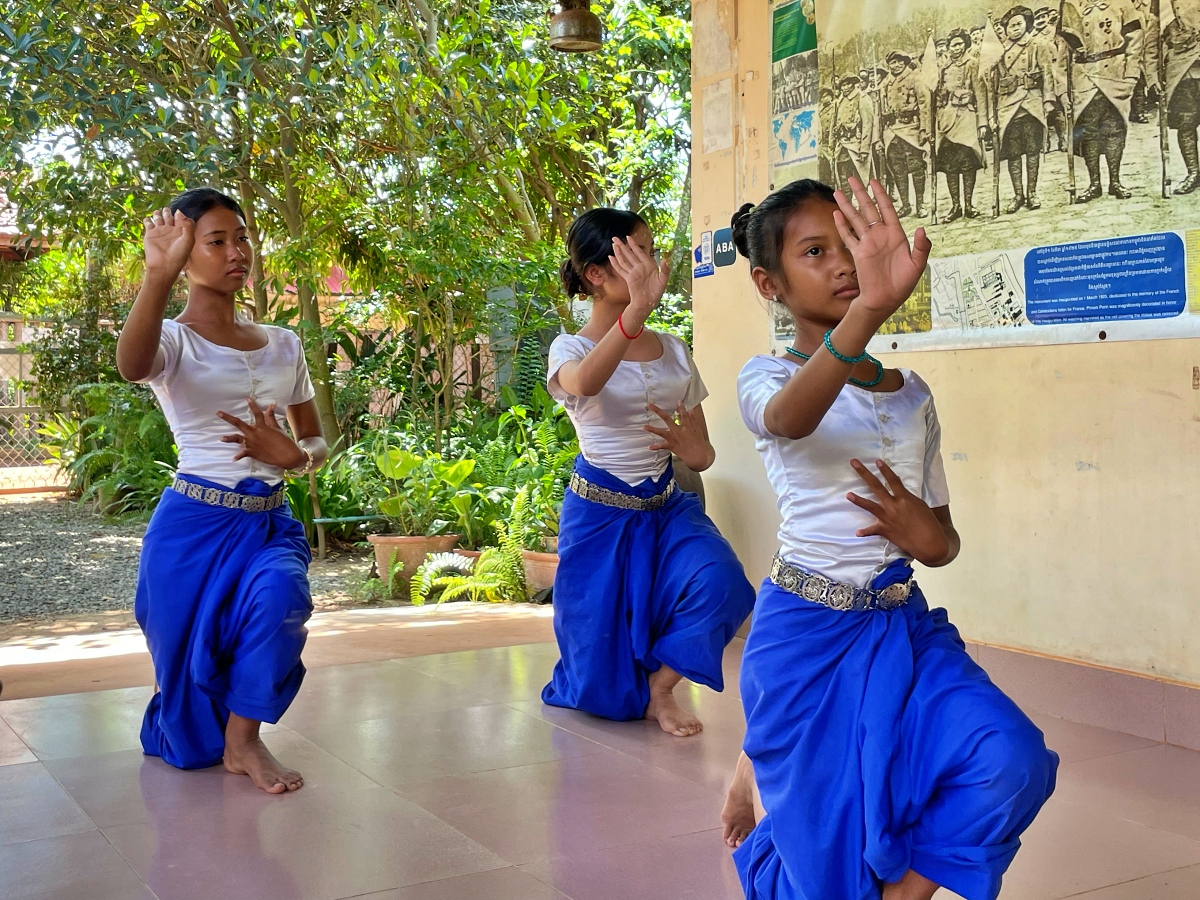
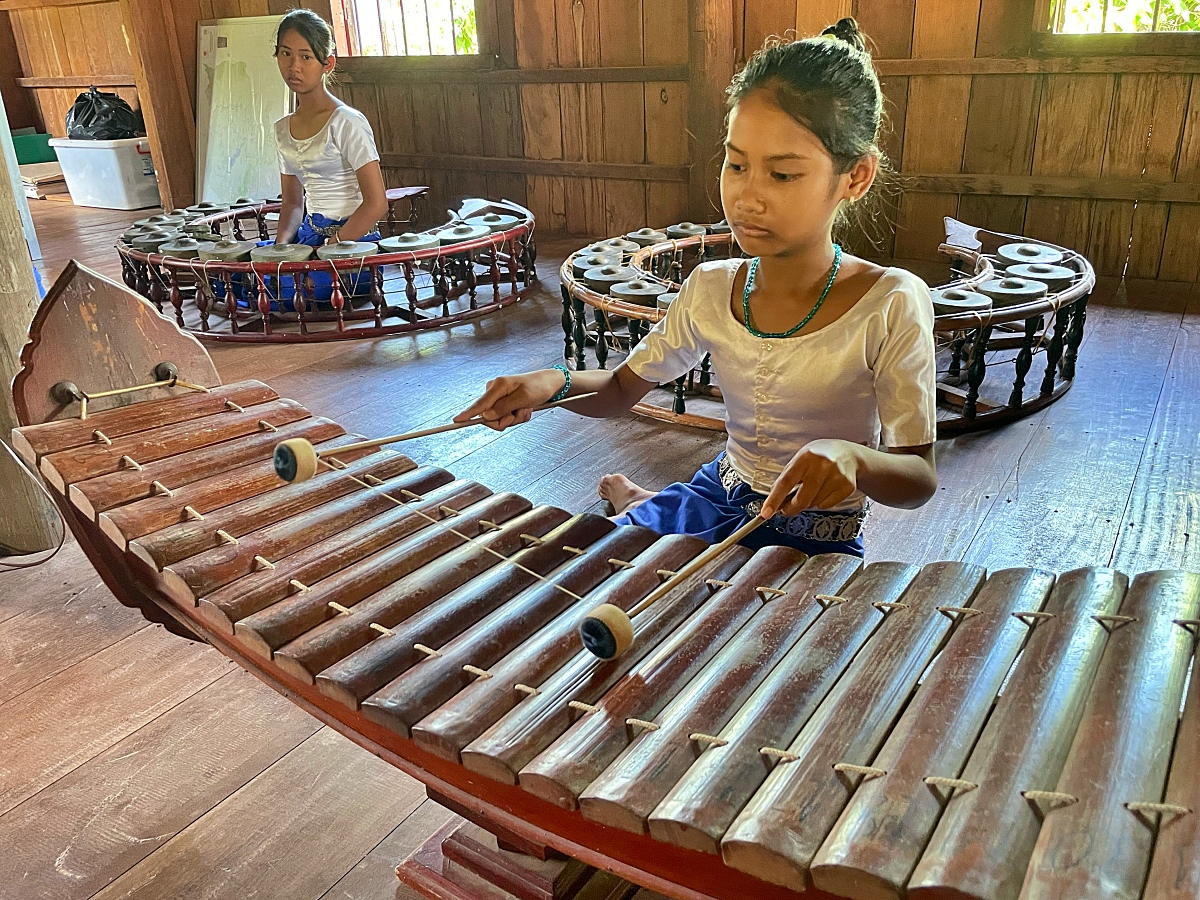
By offering these activities to neighbourhood children, the library helps ensure that Cambodia’s cultural traditions remain part of everyday life. And that is what makes this initiative particularly special. Preserving heritage is not only about restoring ancient stones or protecting archaeological sites. It is also about keeping traditions alive and passing knowledge from one generation to the next.
For us, this is a wonderful example of how cultural preservation and community education can go hand in hand.
The Ancient Khmer Highway – A Forgotten Network
Perhaps the most fascinating part of our visit was our conversation about the ancient road network of the Khmer Empire. Standing in front of a large historical map, Kosal explained how important temples and settlements were once connected by an extensive network of roads. During the Angkor period, these routes helped connect different parts of the empire, facilitating travel, communication, administration, and trade. Some sections included remarkable stone bridges, traces of which can still be found in the Cambodian countryside today.
One particular route caught our attention: the ancient connection between Beng Mealea and Preah Khan of Kampong Svay, also known as Prasat Bakan. This is a region we have been interested in exploring for quite some time. Unlike the popular temples around Siem Reap, much of this historical landscape receives very few visitors. Parts of the ancient route have become overgrown, and access can be extremely difficult.
During the rainy season, exploring these remote areas is particularly challenging. Even in the dry season, some tracks are so narrow and overgrown that passage by motorcycle can be difficult, let alone by a four-wheel vehicle. Together with Kosal, we are hoping to investigate sections of this ancient route and visit lesser-known temples in the future. Whether every location will be accessible remains to be seen. But that is also part of the fascination: discovering what remains of a remarkable historical network that once connected important centres of the Khmer civilisation.
A Different Perspective on Angkor
Most visitors experience Angkor through its magnificent temples, impressive carvings, and extraordinary architecture. And rightly so. But behind every temple lies a much larger story.
How were these monuments constructed? How were materials transported? What connected distant settlements? How did people travel between the great religious and administrative centres? And what is being done today to preserve what remains? These are precisely the kinds of questions that make a visit to the Jayavarman VII Library so rewarding.
It offers an opportunity to look beyond individual monuments and better understand the civilisation that created them. It also introduces visitors to the people who continue researching, protecting, and sharing this extraordinary heritage.
Planning Your Visit
The Jayavarman VII Library is not a typical tourist attraction with a fixed sightseeing programme. We strongly recommend contacting the library several days in advance to arrange an appointment, particularly if you would like a more detailed introduction to its historical research and projects.
A visit is especially worthwhile for travellers with a genuine interest in Khmer history, archaeology, temple restoration, ancient architecture, and cultural preservation. It may not be an essential stop for someone visiting Siem Reap for just one or two days. However, for those who want to explore Cambodia beyond its famous attractions, it offers something different and deeply rewarding.
Practical information
Location: Chreav area, Siem Reap, Cambodia
Opening hours: Monday to Saturday, 8:30 AM – 5:00 PM
Contact: Kosal Mey
Phone / WhatsApp: +855 97 932 6767
Email: kosalmey7@gmail.com
Website: jayavarman7library.blogspot.com
We recommend confirming opening hours and arranging your visit in advance.
Why Places Like This Matter
At Cambodian Travel Partner, we have always believed that the most memorable journeys are not necessarily about visiting the greatest number of attractions. They are about meaningful encounters, unexpected discoveries, and meeting people who have a story worth sharing.
Our visit to the Jayavarman VII Library reminded us once again that Cambodia’s heritage is not confined to its ancient temples. It lives in the dedication of people like Kosal Mey, in the children learning traditional music and dance, and in the continuing efforts to understand and preserve the achievements of the Khmer civilisation. And somewhere beyond Beng Mealea, hidden among the forests and remote villages, the remains of an ancient Khmer road are waiting to reveal more of their story. Perhaps one day we will follow it.
After all, why not?
Discover Cambodia beyond the ordinary with Cambodian Travel Partner. We create private, tailor-made journeys that connect you with Cambodia’s history, culture, local communities, and lesser-known treasures.