 Deutsch
 Nederlands

AI Travel Planning vs Local Travel Experts in Cambodia
AI Can Plan Your Trip, But Can It Really Know Cambodia?
A computer can create an itinerary in seconds. Understanding a destination takes years.
Artificial intelligence has changed the way we live, work and travel. Within seconds, anyone can ask AI to create a two-week itinerary through Cambodia, including temples, waterfalls, national parks, remote villages, jungle adventures and tropical islands.
It sounds fantastic. A detailed travel programme appears on the screen, complete with driving times, suggested activities and descriptions of places that many travellers have never heard of. The next step? Sending the itinerary to a travel agency and asking for a quotation.
At Cambodian Travel Partner, we receive these kinds of requests increasingly often. And quite frequently, we recognise the characteristics of an AI-generated itinerary almost immediately. Not because the programme looks unprofessional, but because there is a significant difference between knowing about a country and actually knowing the country.
An Impressive Itinerary on Paper
Recently, we received a proposal for a 14-day journey through Cambodia. The programme included ancient temples, remote waterfalls, kayaking on the Mekong, hiking in national parks, exploring the Cardamom Mountains and relaxing on a tropical island. At first glance, it looked like an exciting adventure. But when we examined the details, several problems became apparent.

Some days included hours of driving combined with multiple activities in different locations. Important historical sites were completely overlooked. Unusual geographical names appeared that are rarely used in the local tourism industry. Driving times were optimistic, and little consideration had been given to seasonal conditions or practical logistics. The travellers would have spent a considerable part of their holiday sitting in a vehicle rather than experiencing Cambodia. And that raises an important question:
Are you travelling to discover a country, or simply to cover as much distance as possible?
Google Maps Does Not Tell the Whole Story
One of the biggest challenges with digitally generated itineraries is the interpretation of distances and driving times. A route that looks perfectly reasonable on a computer screen can be a very different experience in reality. Cambodia has excellent roads in many areas, but travelling through remote regions can involve rural roads, construction work, seasonal flooding, ferry crossings or unexpected delays. A three-hour journey on a digital map does not include stopping at a colourful local market, enjoying lunch in a village, meeting local people or discovering something unexpected along the way. And sometimes, those unplanned moments become the most memorable experiences of an entire holiday.
Local specialists know which roads are worth taking, which routes offer beautiful scenery and which alternatives are simply more practical. The shortest route is not necessarily the most interesting one.
Knowing a Place Is More Than Knowing Its Name
AI has access to an enormous amount of information. It can identify remote waterfalls, little-known temples and villages that rarely appear in traditional travel brochures. But finding a place online does not automatically mean it is worth including in a journey. Is the waterfall impressive throughout the year or only during the rainy season? Is the road accessible? How long does the walk actually take? Is there a reliable local guide? Is the experience suitable for the traveller’s physical abilities?
These are questions that require more than information collected from the internet. Take Cambodia’s flooded forests, for example. Their appearance and accessibility change dramatically throughout the year. An extraordinary kayaking experience during one season may be completely different several months later. The same applies to waterfalls, wildlife encounters, jungle trekking and remote community visits.

Local knowledge is not static. It evolves with the seasons, changing infrastructure and developments within local communities.
The Danger of Trying to See Everything
One of the most common mistakes in AI-generated itineraries is trying to include too much. A morning visiting a sacred mountain, an afternoon exploring an ancient temple complex, followed by another long drive to the next destination. Technically, it might be possible.
But would it be enjoyable? At Cambodian Travel Partner, we often recommend spending more time in fewer places.
Imagine enjoying a peaceful sunrise along the Mekong, having breakfast without watching the clock, taking a bicycle ride through a rural village or spending an afternoon talking with local people. These experiences rarely fit neatly into a tightly scheduled itinerary. Yet they are often the moments travellers remember years later. A holiday should not feel like a race against time. There should be room for curiosity, spontaneity, relaxation and discovery.
Travel is not about how many places you visit. It is about what you experience along the way.
Why Local Specialists Make the Difference
Since moving to Siem Reap in 2007, we have spent countless days exploring Cambodia. We have travelled through remote provinces, discovered forgotten temples, driven through the Cardamom Mountains, explored the Mekong and visited communities far beyond the traditional tourist routes.
We continue to inspect hotels, discover new experiences, meet local entrepreneurs and explore alternative routes. This is not something we do exclusively from behind a computer screen. We experience Cambodia ourselves.
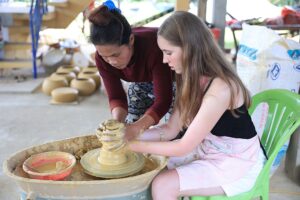
When we recommend a destination, we consider not only what there is to see, but also how it fits into the overall journey. Sometimes we recommend removing a famous attraction. Sometimes we suggest staying an extra night somewhere. Sometimes we take travellers along a completely different route because we know what they would otherwise miss. That is the difference between generating an itinerary and designing a journey.
AI Is a Tool, Not a Destination Specialist
We are certainly not against artificial intelligence. In fact, we embrace technology and use AI within our own company. AI is an excellent source of inspiration. It can help travellers discover destinations, explore possibilities and identify their interests. However, we believe the best results come from combining technology with human experience, personal knowledge and local expertise.
Use AI to inspire your next adventure. Tell us what excites you, what you would love to experience and what kind of journey you are dreaming about. Then allow us to transform those ideas into a realistic, meaningful and unforgettable travel experience. Because a computer can tell you where to go, but a local specialist can tell you why you should go, when you should go and how to make the most of being there.
Cambodia Beyond the Guidebooks
Our philosophy has always been to take travellers beyond the obvious. It is also the inspiration behind our book, Cambodia – Why Not? A Journey Behind the Guidebooks, in which we share our personal discoveries, favourite journeys and extraordinary experiences collected over many years.

Cambodia is a country that deserves more than a computer-generated checklist. It deserves time, curiosity and the freedom to explore. So, before asking AI to organise every detail of your next holiday, consider speaking with someone who actually knows the destination.
AI can generate a travel itinerary. Experience can turn it into the journey of a lifetime.
Cambodian Travel Partner – Cambodia beyond the guidebooks.